
Living in a small house or apartment, or even in a studio or a dorm room, is a challenge in many ways but that doesn't mean you can't maximize the space you do have and create a beautiful home for yourself.
Leave some open space and a wall or two bare in your home. This will give your home a more spacious open feeling, plus it's restful for the eyes. Crowding every inch of floor or wall space is counter-productive when you're trying to create a beautiful home.
Declutter and down size. Get rid of the excess stuff you don't need. A small space looks junky when you pile on the knick-knacks, have an excessive amount of books, or you hang too many pictures on the walls. If you just can't get rid of your excess stuff, then put the best on display, a few at a time, and rotate them.

Don't hang lots of magnets, photos, or kids papers on your refrigerator either. It never looks good. Hang one or two special kids art projects, and photos at a time if you must. That's enough.
Create storage where there was none. If you're handy you can create DIY storage units. Use multi-purpose furniture, like storage benches in your dining area, or ottomans that with a storage compartment inside. You can also use wicker trunks as a coffee table or bedside table.
If your bathroom or kitchen areas are lacking in storage space, try to find room for at least one bookcase. Bookcases can hold so much more than just books and are often slim enough to fit in spaces that larger furniture won't.  Add wall shelves wherever feasible including hallways. Hallways are a great place to put narrow dressers or bookcases too.
Choose comfortable furniture that not only looks good but feels good to sit or lounge on. Buy smaller sized furniture and less of it, but get what you love. A small home means you see your stuff a lot more often than you would in a huge home.
Meet the neighbors and get out and explore the neighborhood. You may not be living in your ideal home yet but this small space is home for now. Getting comfortable with your surroundings and the people around you can make living in your small space a whole lot more enjoyable.
|
Tuesday, February 21, 2017
Making the Most of a Small Home


Saturday, February 18, 2017
Sunday, February 12, 2017
Wednesday, February 8, 2017
Recycling Aluminum and Reducing Your Aluminum Foil Use

How to Reuse, Recycle, and Reduce Aluminum
Aluminum is 100% recyclable, yet only about 65% of the average Americans household aluminum gets recycled each year. Nearly all of that is in the form of aluminum cans. You can recycle 100% of the aluminum your family uses, and here's how to do it.
Eliminate, or significantly reduce your aluminum foil use. It's estimated that each American throws away about three pounds of aluminum foil per year. None of that foil should be getting to the landfill, recycle it instead.
Not all recyclers allow aluminum foil, but if yours does then make sure to do your part. Remember it takes around 400 years for that aluminum foil to break down naturally.
If you're lucky, like me, your city does allow aluminum foil to be recycled. Just wash, and dry before recycling with the rest of your household aluminum. Or follow your cities recycling regulations for aluminum.
Instead of using aluminum foil to cover leftovers place food in bowls with lids. Or make your own covers.
Rewash and reuse all the aluminum foil that you do use until it can't be used anymore and then take it to the recyclers. You can also recycle those aluminum pie plates and other baking containers, so be sure to recycle them too.
Not all recyclers allow aluminum foil, but if yours does then make sure to do your part. Remember it takes around 400 years for that aluminum foil to break down naturally.
If you're lucky, like me, your city does allow aluminum foil to be recycled. Just wash, and dry before recycling with the rest of your household aluminum. Or follow your cities recycling regulations for aluminum.
Instead of using aluminum foil to cover leftovers place food in bowls with lids. Or make your own covers.
Rewash and reuse all the aluminum foil that you do use until it can't be used anymore and then take it to the recyclers. You can also recycle those aluminum pie plates and other baking containers, so be sure to recycle them too.
Recycle all the aluminum packaging that comes into your household per year. Remember aluminum is 100% recyclable. The average American throws away 14 1/2 pounds of aluminum from packaging a year. That's not counting aluminum cans.
It is all recyclable, and we can all do our part to see that our household aluminum does get recycled. Consult your area recycling company for how and where to recycle aluminum packaging from your household, or from your job.
It is all recyclable, and we can all do our part to see that our household aluminum does get recycled. Consult your area recycling company for how and where to recycle aluminum packaging from your household, or from your job.
Aluminum cans are the most common aluminum recyclable, but we can do even more. Do you recycle the 2.5 cans that each American worker is said to consume at work each day?
If your work does not recycle aluminum cans, maybe someone can at least be responsible for taking the cans home and recycling them. Recycling aluminum cans is big business. It's also good for the environment so do your part.
Other aluminum recyclables include things like aluminum siding, gutters, aluminum wire, and anything else made of 100% aluminum. It can all be recycled. And it all should be. Our landfills are far too full of recyclable materials like aluminum.
Tips
- Recycle 100% of the aluminum that comes into your household.
- Drastically reduce your households use of aluminum foil.
- Don't forget to recycle aluminum cans and other aluminum at your workplace.


Sunday, January 15, 2017
Trees and 100% Replanted Replant What You Use


Each of us uses an average of 65 cubic feet of wood every year - equivalent to six 12-14" diameter trees - in paper and wood products. Worldwide, tree harvesting far outstrips replanting, threatening the clean water, air supplies, and livelihoods of many people. How can you help? You can replant the trees you use, quickly and easily, by joining the 100% Replanted program.
Reduce - Reuse - Recycle - REPLANT.
Please click on the link below and do your part in the effort to replant trees worldwide.
100% Replanted ... Replant What You Use
Friday, January 6, 2017
The Importance and Value of Trees

Since the beginning, trees have furnished us with two of life's essentials, food and oxygen. As we evolved, they provided additional necessities such as shelter, medicine, and tools. Today, their value continues to increase and more benefits of trees are being discovered as their role expands to satisfy the needs created by our modern lifestyles.
This article comes from:
http://www.savatree.com/birch-tree.html
Community and Social Value
Trees are an important part of every community. Our streets, parks, playgrounds and backyards are lined with trees that create a peaceful, aesthetically pleasing environment. Trees increase our quality of life by bringing natural elements and wildlife habitats into urban settings. We gather under the cool shade they provide during outdoor activities with family and friends. Many neighborhoods are also the home of very old trees that serve as historic landmarks and a great source of town pride.
In addition, architectural and engineering functions are served by your community's trees. They frame landscapes, create beautiful backgrounds and enhance building designs. Trees can provide privacy, emphasize beautiful views, and screen unsightly areas. Noise from roadways and other urban activities is muffled by well-placed trees that serve as sound barriers. As a matter of fact, the U.S. Environmental Protection Agency states that trees can reduce bothersome noise by up to 50% and mask unwanted noises with pleasant, natural sounds. Using trees in cities to deflect the sunlight reduces the heat island effect caused by pavement and commercial buildings.
Ecological and Environmental Value
Trees contribute to their environment by providing oxygen, improving air quality, climate amelioration, conserving water, preserving soil, and supporting wildlife. During the process of photosynthesis, trees take in carbon dioxide and produce the oxygen we breathe. According to the U.S. Department of Agriculture, "One acre of forest absorbs six tons of carbon dioxide and puts out four tons of oxygen. This is enough to meet the annual needs of 18 people." Trees, shrubs and turf also filter air by removing dust and absorbing other pollutants like carbon monoxide, sulfur dioxide and nitrogen dioxide. After trees intercept unhealthy particles, rain washes them to the ground.
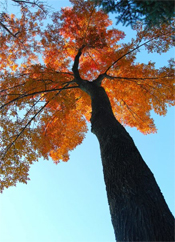
Trees control climate by moderating the effects of the sun, rain and wind. Leaves absorb and filter the sun's radiant energy, keeping things cool in summer. Trees also preserve warmth by providing a screen from harsh wind. In addition to influencing wind speed and direction, they shield us from the downfall of rain, sleet and hail. Trees also lower the air temperature and reduce the heat intensity of the greenhouse effect by maintaining low levels of carbon dioxide.
Both above and below ground, trees are essential to the eco-systems in which they reside. Far reaching roots hold soil in place and fight erosion. Trees absorb and store rainwater which reduce runoff and sediment deposit after storms. This helps the ground water supply recharge, prevents the transport of chemicals into streams and prevents flooding. Fallen leaves make excellent compost that enriches soil.
Many animals, including elephants, koalas and giraffes eat leaves for nourishment. Flowers are eaten by monkeys, and nectar is a favorite of birds, bats and many insects. Animals also eat much of the same fruit that we enjoy This process helps disperse seeds over great distances. Of course, hundreds of living creatures call trees their home. Leaf-covered branches keep many animals, such as birds and squirrels, out of the reach of predators.
Personal and Spiritual Value
The main reason we like trees is because they are both beautiful and majestic. No two are alike. Different species display a seemingly endless variety of shapes, forms, textures and vibrant colors. Even individual trees vary their appearance throughout the course of the year as the seasons change. The strength, long lifespan and regal stature of trees give them a monument-like quality. Most of us react to the presence of trees with a pleasant, relaxed, comfortable feeling. In fact, many people plant trees as living memorials of life-changing events.
Trees help record the history of your family as they grow and develop alongside you and your kids. We often make an emotional connection with trees we plant or become personally attached to the ones that we see every day. These strong bonds are evidenced by the hundreds of groups and organizations across the country that go to great lengths to protect and save particularly large or historic trees from the dangers of modern development. How many of your childhood memories include the trees in your backyard or old neighborhood? The sentimental value of a special tree is simply immeasurable.
Practical and Commercial Value
Trees have supported and sustained life throughout our existence. They have a wide variety of practical and commercial uses. Wood was the very first fuel, and is still used for cooking and heating by about half of the world's population. Trees provide timber for building construction, furniture manufacture, tools, sporting equipment, and thousands of household items. Wood pulp is used to make paper.
We are all aware of apples, oranges and the countless other fruits and nuts provided by trees, as well as the tasty syrup of North American sugar maples. But did you know the bark of some trees can be made into cork and is a source of chemicals and medicines? Quinine and aspirin are both made from bark extracts. The inner bark of some trees contains latex, the main ingredient of rubber. How many more uses can you name?
Property Value and Economic Value
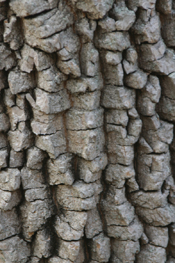
Individual trees and shrubs have value and contribute to savings, but it is the collective influence of a well-maintained landscape that makes a real economic impact and has the greatest effect on property value. Direct economic benefits come from a savings in energy costs. Cooling costs are reduced in a tree-shaded home, and heating costs lowered when a tree serves as a windbreak. According to the USDA Forest Service, "Trees properly placed around buildings can reduce air conditioning needs by 30% and save 20-50 percent in energy used for heating."
Property values of homes with well-maintained landscapes are up to 20% higher than others. Here are some eye-opening facts and statistics regarding the effect of healthy trees and shrubs:
- Homes with "excellent" landscaping can expect a sale price 6-7% higher than equivalent houses with "good" landscaping. Improving "average" to "good" landscaping can result in a 4-5% increase.
- Clemson University - Landscaping can bring a recovery value of 100-200% at selling time. (Kitchen remodeling brings 75-125%, bathroom remodeling 20-120%)
- Money Magazine - A mature tree can have an appraised value between $1000 and $10,000.
- Council of Tree and Landscape Appraisers - 99% of real estate appraisers concurred that landscaping enhances the sales appeal of real estate.
- Trendnomics, National Gardening Association - 98% of realtors believe that mature trees have a "strong or moderate impact" on the salability of homes listed for over $250,000 (83% believe the same for homes listed under $150,000).
- American Forests, Arbor National Mortgage

Subscribe to:
Posts (Atom)